

Tina Marenghi’s journey in gymnastics spans more than five decades, beginning when she first stepped into the gym at the age of seven. That lifelong commitment to the sport saw her represent Wales on one of the world’s biggest stages, the Commonwealth Games, not once, but twice.
Tina made history at the 1978 Commonwealth Games in Edmonton, Canada, where she competed as the youngest athlete at the Games across all sports. Eligibility rules required competitors to be 14 years old by the closing date of the Games, a date that happened to fall on Tina’s 14th birthday, 12th August 1978. At the time, however, Tina was too young and too immersed in her everyday training life to fully appreciate the scale of the achievement.
“I was very young, very naïve, and didn’t really appreciate what an achievement it was,” she reflects. “It was just the norm to me. I did gymnastics, I loved it, I trained a lot, travelled a lot, that was normal life.” Looking back now, Tina recognises just how significant the moment was, and why her parents were so proud. “My mum still tells everyone now,” she said, “and I’m like, ‘Shh mum, they don’t want to know!’”
While challenges at the Games were simply part of performing routines to the best of her ability, one moment stands out vividly. Tina recalls falling on her beam mount, “the worst thing I could have done”, before having to refocus and complete the rest of her routine in front of an estimated 16,000 spectators. Beyond her own performance, she fondly remembers watching world-class gymnasts from the Canadian and Australian teams, experiences that left a lasting impression.
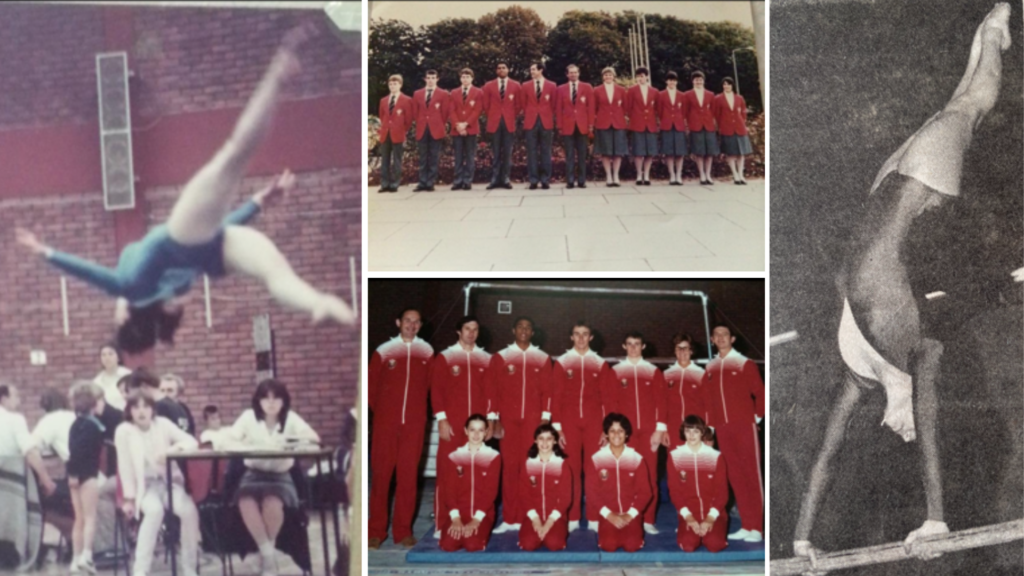
Being the youngest competitor also brought unexpected attention. Tina found herself regularly pulled into press interviews and photoshoots, something she admits was overwhelming and at times quite scary. Yet there were also touching moments, including gifts left by athletes from other nations who recognised what she had achieved at such a young age. Among her most treasured memories was a visit from the Queen to the athletes’ village, a moment she still describes as very special.
Four years later, Tina returned to the Commonwealth Games stage at the 1982 Games in Brisbane, Australia, this time as an 18-year-old athlete. With greater maturity and less media attention, she was able to appreciate the experience more fully. The first week in Australia was spent staying with a host family in Surfers Paradise, who supported the team by taking them to training each day, a connection Tina has maintained to this day. Competition week then saw the team move to Brisbane, staying at Queensland University in individual rooms to prepare for the Games.
Travelling across the world at such a young age had a profound impact on Tina, helping her develop confidence, discipline, independence and strong people skills, qualities that would shape her life beyond gymnastics. She retired from competitive gymnastics shortly after turning 19, but completely stepping away from the sport was never truly an option.
“I didn’t even think about it,” she says. “I did my coaching course straight away and became a qualified club coach.” Coaching was always part of the plan, even if initially it was only meant to be for a few years. After a short break while raising her daughters, Tina returned to the gym and has remained deeply involved ever since. Now 61, she runs City of Newport Gymnastics Academy alongside her husband and can proudly say she has been part of the sport for approximately 54 years.
The transition from athlete to coach brought a clear mindset shift, moving the focus away from herself and onto others. Tina feels a strong moral responsibility to pass on the knowledge, experience and values she gained through gymnastics. “I’ve worked hard,” she says, “but there have been a million people behind the scenes helping me get to where I am. I hope I’m now helping the next generation in the same way.”
Her coaching philosophy extends far beyond skills and routines. Tina hopes her gymnasts remember conversations about confidence, teamwork and people skills, as well as lessons that help them navigate challenges both inside and outside the gym. “The problems young people face now with peers,” she explains, “are the same problems they’ll face in the workplace later in life. If I’ve helped them with life skills, not just gymnastics, then I’ve done my job.”
She is also passionate about encouraging athletes approaching the end of their competitive careers to remain involved in the sport through coaching, judging or volunteering. “Giving back your knowledge and experience is an amazing feeling,” she says, while emphasising the lasting impact a coach can have on a young gymnast’s future, not just in sport, but in preparing them for adulthood.
Reflecting on her own journey, Tina highlights the importance of strong support networks and accessible education pathways to help gymnasts transition into coaching roles. Stepping into coaching, she believes, brings a deep sense of care, responsibility and the need to be a positive role model, values she continues to uphold after a lifetime dedicated to gymnastics.
If you want to begin your coaching journey or expand your knowledge, explore our courses page to find a course that’s right for you.